Hydration and Chronic Kidney Disease: Why Consistent Fluid Intake Matters
For people living with chronic kidney disease (CKD), daily hydration is not simply a wellness habit—it is often an important part of managing overall health. The kidneys play a critical role in filtering waste, balancing electrolytes, and regulating fluid levels in the body.
When hydration levels fluctuate too much, the kidneys may need to work harder to maintain that balance.
While fluid needs vary depending on the stage of kidney disease and each patient’s medical guidance, one challenge is common across many people with CKD: maintaining consistent fluid intake throughout the day.
Why hydration matters in kidney health
Healthy kidneys continuously remove waste products and excess substances from the bloodstream through urine. Water supports this filtration process by helping move waste through the kidneys and urinary system.
When fluid intake is too low, the body can become mildly dehydrated, which may reduce blood flow to the kidneys and place additional strain on kidney function. Over time, repeated dehydration episodes may make daily kidney management more difficult.
For many individuals with CKD, hydration is not about drinking large amounts of water at once. In fact, consistency often matters more than volume. Small, steady intake throughout the day can be easier for the body to regulate than long periods without fluids followed by large amounts at once.
The challenge of remembering to drink enough water
One of the most common reasons people struggle with hydration is simple: daily routines are busy, and thirst is not always a reliable signal.
Many people do not feel thirsty until they are already mildly dehydrated. Others intentionally reduce drinking because they are concerned about fluid restrictions, making it even harder to find the right balance.
For CKD patients especially, hydration often requires more awareness than most people expect:
- remembering to drink regularly
- spacing intake during the day
- avoiding long periods without fluids
- staying aligned with physician recommendations
This is where daily habits become important.

Why consistency is often more important than quantity
The body responds better to hydration when intake is spread throughout the day rather than concentrated into a few moments.
Drinking steadily may help:
- support circulation
- maintain normal urinary flow
- reduce sudden fluid imbalance
- make daily intake easier to monitor
This is particularly relevant for people managing chronic conditions where fluid intake may already be part of a broader care routine.
How technology can support hydration habits
Because hydration is easy to forget, many people benefit from simple reminders and visual tracking.
Smart hydration tools are becoming increasingly useful because they remove the need to constantly think about whether enough water has been consumed.
Solutions such as smart water bottles can gently support hydration adherence by:
- providing reminders during the day
- showing progress toward a daily intake goal
- helping users avoid long hydration gaps
- creating more consistent routines over time
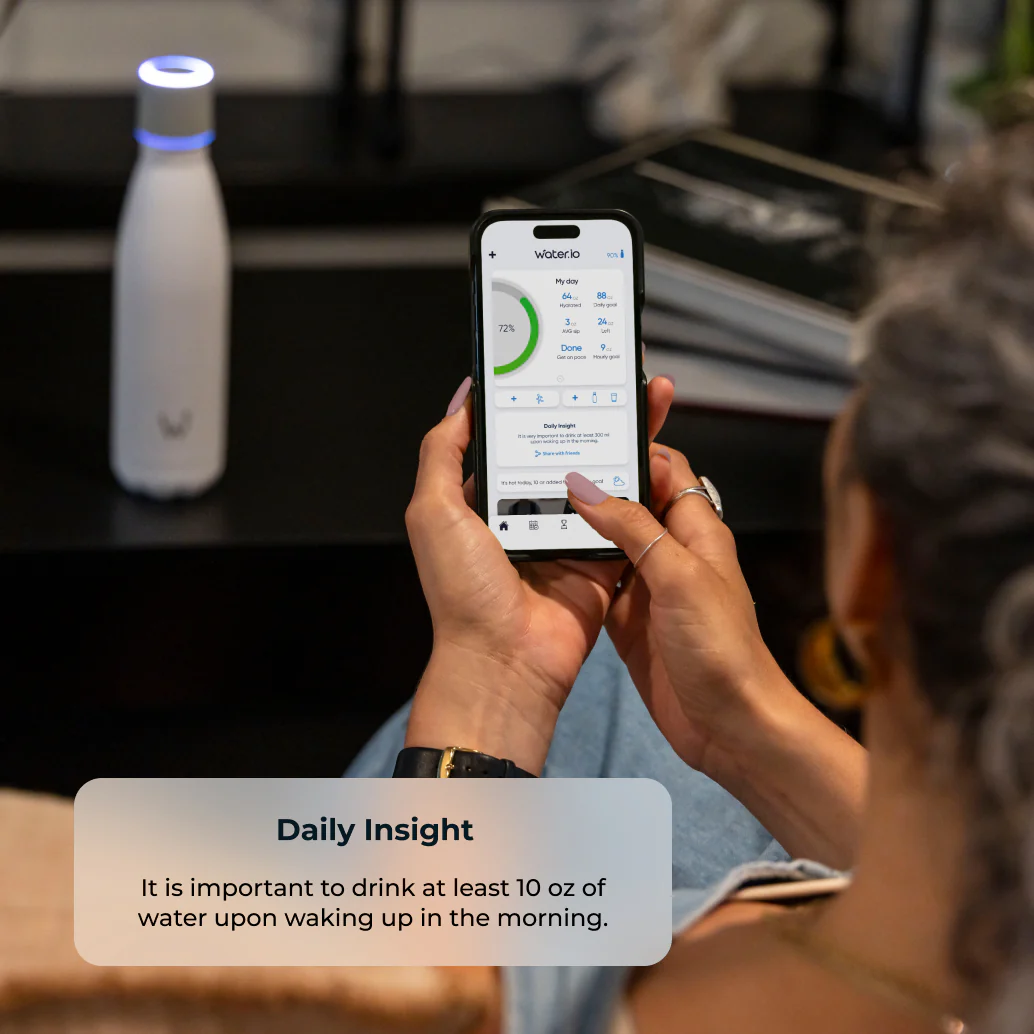
A connected solution like Water.io is designed around this type of behavioral support. Rather than relying only on memory, users receive small prompts that help hydration become part of an automatic daily routine.
For individuals managing kidney health, this kind of gentle support may make hydration easier to maintain without adding complexity.
Hydration should always follow medical guidance
It is important to note that fluid recommendations for CKD are highly individual.
Some people are encouraged to increase fluid intake, while others—especially in more advanced stages—may need to follow specific fluid limits recommended by their healthcare provider.
That means hydration tracking is not about drinking more indiscriminately. It is about following the right daily pattern for your body and your care plan.
Building better daily habits
Hydration works best when it becomes consistent, simple, and measurable.
For many people, the biggest improvement comes not from dramatic changes, but from small daily actions repeated reliably:
- drinking earlier in the day
- spacing fluids evenly
- responding to reminders
- monitoring daily consistency
Over time, these small habits can help support better adherence to physician-guided hydration goals.
Final thought
For people living with chronic kidney disease, hydration is one of the daily behaviors that deserves attention—not because it is complicated, but because consistency can be difficult without support.
When hydration becomes visible and easier to manage, it often becomes easier to maintain as part of everyday care.